
By Jamesetta D. Williams
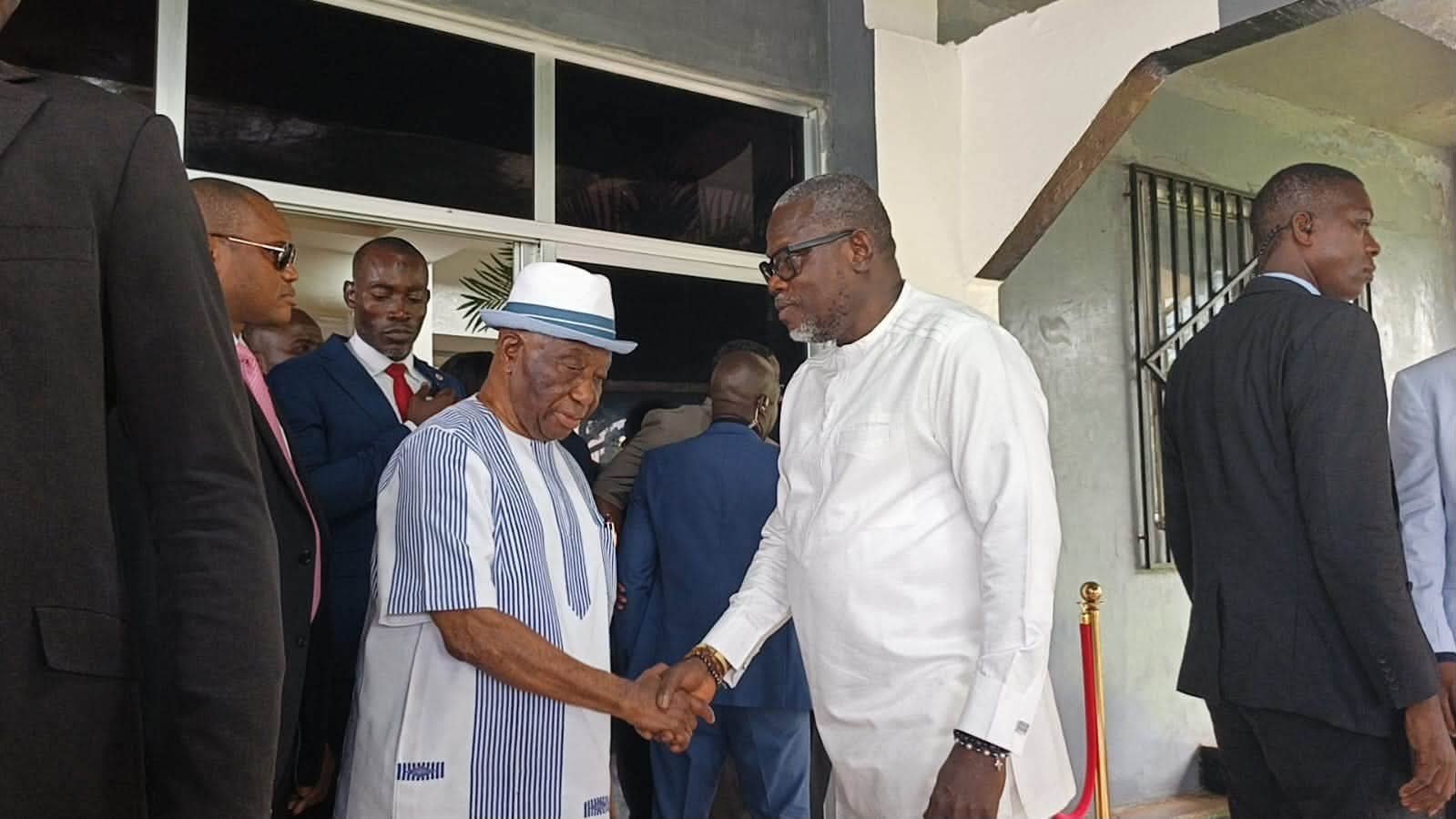
MONROVIA–President Joseph Nyuma Boakai last Friday visited the Ministry of Information, touring the refurbished facility and viewing a documentary highlighting the building’s condition before and after renovation.
The presidential visit comes amid ongoing discussions and criticism surrounding the conduct of some officials at the Ministry of Information, particularly their public engagements with members of the Legislature and opposition figures. The central question being in some quarters focused on the outcome of the visit – what is his take away?
Some critics have accused Ministry officials of using language they consider harsh or disrespectful when responding to government critics and lawmakers. However, Information Minister Jerolinmek Piah has challenged those making the allegations to provide evidence to substantiate their claims.
The controversy has also been accompanied by reports that some senior members of the Legislature, particularly within the Senate, have called for changes involving key officials at the Ministry, including Deputy Information Minister Daniel Sando.
Sando has attracted criticism over his strong public responses to opposition figures and lawmakers during discussions surrounding government policies and national issues.
Despite the reported concerns, President Boakai did not publicly address the allegations or reported calls for changes during his visit.
Instead, the President toured the renovated Ministry of Information building and engaged with officials, an appearance that has generated questions about his position on the Ministry’s current leadership.
While the visit does not, on its own, constitute a formal statement of confidence in any individual official, the President’s decision to visit the institution and observe its ongoing transformation could be interpreted as an indication that his administration continues to support the Ministry’s institutional work.
Since taking office, Minister Piah has overseen efforts to renovate and restore the Ministry’s facilities, which officials have described as having deteriorated significantly under the previous administration.
The refurbishment has resulted in improvements to the appearance and working environment of the Ministry, with the documentary presented to the President providing a comparison between the condition of the facility before the renovation and its current state.
The Ministry of Information remains a key institution of the Boakai administration, with responsibility for communicating government policies, providing public information, engaging the media, and responding to concerns surrounding national issues.
President Boakai’s visit therefore comes at a significant moment for the institution, as questions about the conduct of some officials continue alongside efforts to improve the Ministry’s physical infrastructure and public communication.
For now, the President has not publicly indicated whether any leadership changes are being considered. His visit and tour of the refurbished facility, however, have added another dimension to the ongoing debate over the leadership and direction of the Ministry of Information.
About The Author