
By Benjamin Q. Z. Johnson
Monrovia-Liberia’s development challenges are well documented, ranging from poor road connectivity and limited economic opportunities to gaps in public service delivery and persistent difficulties attracting investment. But what if journalism could do more than expose these problems? What if it could also help citizens identify practical solutions, encourage public institutions to respond and showcase the country’s untapped potential?
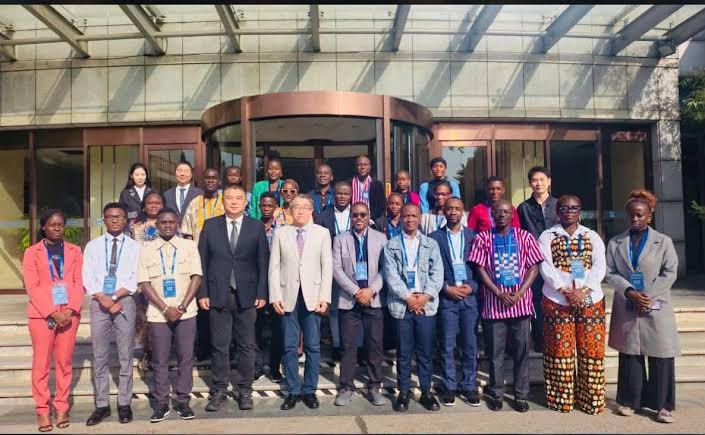
That question lies at the heart of an international communication seminar bringing together 23 Liberian journalists in China to examine how constructive journalism, strategic communication and development storytelling can contribute to national progress.
Sponsored by China’s Ministry of Commerce at the request of the Government of the People’s Republic of China, the two-week training brings together media practitioners from print, broadcast and new media institutions to explore China’s experiences in international communication, public diplomacy, media development and the use of communication to advance national development objectives.
Among the participants is Willie N. Tokpah of FrontPage Africa, joining fellow journalists in examining approaches that could strengthen Liberia’s media capacity and encourage a more solutions-oriented approach to public-interest reporting.
For Liberia, the experience raises a critical question: Can journalism become a stronger bridge between citizens’ concerns, government accountability and the practical ideas needed to accelerate development?
The seminar introduces participants to an approach that moves beyond identifying problems to examining responses, assessing results and highlighting practical ideas that could be adapted to local circumstances.
Solution journalism does not require reporters to abandon investigative reporting or soften legitimate criticism of public officials. Instead, it encourages newsrooms to complement scrutiny with evidence-based reporting that examines what works, what does not, why particular interventions succeed or fail, and what lessons can be drawn from experience.
In Liberia, this approach could be applied to some of the country’s most persistent development challenges.
Reporting on impassable farm-to-market roads, for example, could investigate the economic hardships faced by farmers while examining road-maintenance models, community participation, financing arrangements and the experiences of areas that have improved rural access.
Coverage of youth unemployment could go beyond documenting the scarcity of jobs to investigate vocational training, agricultural enterprises, small-business financing and the barriers preventing graduates from entering the workforce.
Similarly, stories about sanitation, education, healthcare and local governance could examine community-led initiatives, scrutinize public spending and identify practical measures that other communities or institutions might adopt.
The objective is not to manufacture positive news or shield the government from criticism. It is to give citizens a fuller understanding of public problems while providing decision-makers and communities with credible information that can inform action.
For a country seeking to expand economic opportunities and improve living conditions, this form of journalism could help transform public debate into a more practical discussion about development priorities, measurable results and accountability.
Chinese Lecturers Emphasize Journalism’s Role in National Development
During the first week of the seminar, Chinese communication scholars and media officials encouraged the Liberian participants to consider how journalism can contribute to national development.
Professor Zang Yanqiu, Director of the Africa Research Center at the Communication University of China, described constructive reporting as an approach through which journalists identify problems, bring them to the attention of relevant authorities and examine efforts to find workable solutions.
“The journalism profession should be used for the good of the community,” Professor Zang stated.
She urged participants to produce reports that reflect national consciousness and contribute to development.
Her presentation offered the Liberian delegation insight into how Chinese media institutions approach the relationship between public-interest reporting and national development priorities.
Chang Jin, Second-Level Counselor in the Department of International Cooperation at China’s National Radio and Television Administration (NRTA), also highlighted the role of communication in China’s development experience.
He discussed how media organizations can engage with national development priorities and contribute to the common good.
“It is the media responsibility to report in a way that advances the government’s development agenda,” Chang noted.
The perspectives presented by the Chinese lecturers form part of the seminar’s broader examination of communication and development. For Liberian journalists, however, applying these lessons requires adapting them to Liberia’s constitutional protections, independent media traditions and public accountability needs.
Constructive journalism must preserve the media’s responsibility to question authority, investigate wrongdoing and provide citizens with reliable information. Engagement with public institutions cannot replace independent verification, nor should national image-building take precedence over the public’s right to know.
The challenge is to combine rigorous scrutiny with reporting that helps people understand potential solutions and assess whether promised interventions deliver meaningful results.
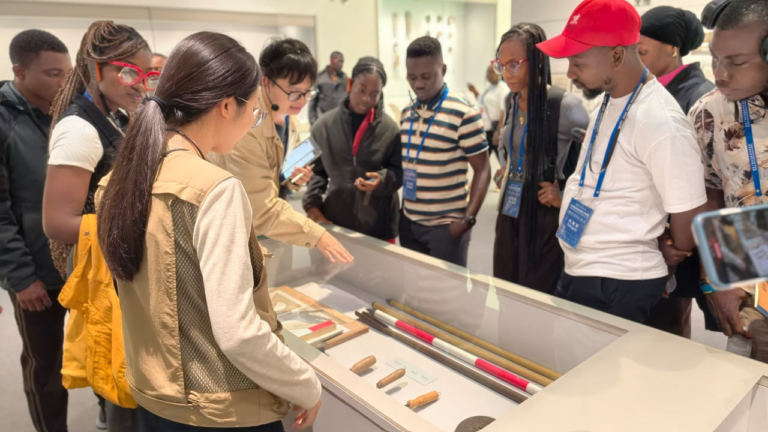
Beyond classroom instruction in Beijing, the Liberian journalists travelled to Anji County in Huzhou City, Zhejiang Province, for field visits examining the relationship between communication, tourism, environmental protection and local development.
One of the delegation’s major stops was Yucun Village, a community associated with the development philosophy expressed in the phrase, “Lucid waters and lush mountains are invaluable assets,” a concept linked to Chinese President Xi Jinping.
The village has become a prominent example of efforts to connect environmental protection with economic development, particularly through tourism and environmentally conscious agricultural practices.
For the visiting journalists, the field experience provided an opportunity to examine how a community’s natural environment and local identity can become economic assets when supported by planning, infrastructure and sustained promotion.
With its forests, beaches, rivers, waterfalls, cultural heritage and diverse communities, Liberia possesses natural and cultural resources that could support tourism, create employment and attract investment. Yet these assets require more than scenic beauty to generate lasting economic benefits.
They also need reliable infrastructure, environmental safeguards, accessible services, community participation and a clear strategy for communicating their value to domestic and international audiences.
Through well-researched reporting, Liberian journalists could bring lesser-known destinations to public attention, investigate the barriers preventing communities from benefiting from tourism and document initiatives that connect environmental conservation with sustainable livelihoods.
Such stories could help potential investors and visitors better understand Liberia’s opportunities while examining whether local communities are sharing in the economic benefits associated with their land and natural resources.
The visit to Yucun therefore offers an opportunity to consider how Liberia can tell its own development stories without simply reproducing another country’s model.
The delegation also visited the Anji County Smart Governance Center, where participants examined the coordination of social and economic services through technology and administrative systems.
The visit introduced the journalists to approaches for organizing information, coordinating public services and communicating with communities in support of governance.
For Liberia, where citizens frequently raise concerns about public service delivery, rural access and the responsiveness of local institutions, the experience presents practical questions worth exploring.
Could county administrations improve the way they receive and respond to citizens’ complaints? Could local authorities publish clearer information about development projects, budgets, timelines and implementation challenges? Could digital communication platforms help communities track the progress of roads, schools, clinics and other public facilities?
These are questions Liberian journalists could investigate and pursue after returning home.
Rather than reporting only when a project is launched or a public official announces a new initiative, newsrooms could follow projects from announcement through implementation and completion, documenting delays, expenditures, community feedback and measurable outcomes.
Such reporting would enable citizens to compare promises with results while giving public officials a clearer picture of the challenges communities face.
The seminar’s field visits also exposed participants to China’s experience with rural transformation, including efforts to address natural-resource depletion and develop alternative livelihood opportunities.
For Liberia, where many rural communities depend directly on forests, farming, fishing and other natural resources, the connection between environmental protection and economic opportunity is particularly relevant.
Any adaptation of these experiences, however, would need to account for Liberia’s land rights, customary institutions, community consent, environmental conditions and available public resources.
The lesson is not that Liberia should copy China’s development pathway wholesale, but that journalists can examine practical experiences elsewhere and assess which ideas might work within Liberia’s own circumstances.
Building Liberia’s International Image Through Better Storytelling
A central component of the seminar is the use of communication for international cooperation, public diplomacy, public relations and national image-building.
Participants are studying international communication in the age of artificial intelligence, global media trends, digital communication, news literacy, disinformation and the changing global media ecosystem.
Other topics include constructive journalism for global development, communication content focused on international hotspots, media infrastructure for governance and building international communication capacity in the era of smart media.
The training also examines the evolution of China’s communication strategies, ideas associated with President Xi Jinping’s earlier leadership within the Communist Party of China, China-Africa cooperation and opportunities for innovative media collaboration between Liberia and China.
These subjects have implications for Liberia’s efforts to attract tourism, expand trade, promote investment and strengthen international partnerships.
A country’s image is shaped not only by official statements and diplomatic engagements but also by the stories circulating about its people, institutions, economy and natural environment.
When international coverage focuses primarily on political disputes, corruption allegations, economic hardship or public emergencies, audiences may receive an incomplete picture of Liberia.
Responsible image-building does not mean concealing these problems. It means broadening the narrative through credible reporting on entrepreneurship, agricultural innovation, cultural heritage, environmental conservation, local manufacturing, education, community initiatives and other developments that reflect the country’s wider reality.
For journalists, this creates an opportunity to identify compelling Liberian stories and present them to international audiences without sacrificing accuracy or editorial independence.
A report about a rural entrepreneur creating jobs, for example, could examine both the achievement and the obstacles to expanding the business. A tourism feature could showcase a destination while investigating road access, visitor safety, conservation needs and the benefits reaching surrounding communities.
Such coverage would promote Liberia’s potential while retaining the scrutiny necessary to make development claims credible.
The seminar’s emphasis on constructive communication also raises an important question: How can citizens become more active participants in shaping development priorities?
Public communication is most useful when it allows communities to explain their needs, propose ideas and evaluate the performance of institutions responsible for addressing them.
In Liberia, local radio stations, community newspapers, online platforms and public forums could provide structured opportunities for citizens to identify development priorities and discuss possible responses.
For instance, a community facing recurring flooding could work with journalists to document affected areas, hear from residents and technical experts, examine drainage proposals and follow the response of local authorities.
A farming community struggling to transport produce could help identify the most urgent road repairs, explain the economic consequences of poor access and assess possible maintenance arrangements.
Such reporting would give citizens a more direct role in public discussion while creating a record against which government responses could be evaluated.
It could also help local authorities identify concerns earlier and communicate more clearly about the limitations, costs and timelines of proposed interventions.
However, citizen participation must be meaningful. Authorities should not simply collect suggestions without explaining which proposals can be implemented, which require additional resources and why others may not be feasible.
For solution journalism to contribute to development, citizens must be able to see whether their ideas receive serious consideration and whether resulting decisions produce measurable improvements.
The 23 journalists are receiving training designed to strengthen their understanding of international communication, public diplomacy, digital media and development-oriented reporting.
Their two-week experience combines classroom instruction with field visits, providing an opportunity to observe how communication connects with broader development strategies.
The real test, however, will come after the delegation returns to Liberia.
The knowledge gained in China could be translated into practical newsroom initiatives, including solution-focused reporting series, community development features, evidence-based examinations of public projects and multimedia stories showcasing Liberia’s economic and cultural potential.
News organizations could establish clear editorial standards for solution journalism, requiring reporters to identify the problem, examine proposed responses, consult affected communities, verify evidence and assess whether an intervention is producing results.
Such standards would help prevent solution journalism from becoming a public-relations exercise or a platform for repeating official claims.
Media organizations could also collaborate with journalism training institutions, civil society organizations, and community groups to strengthen reporting on local development challenges.
For smaller newsrooms operating with limited resources, this approach need not require expensive equipment or elaborate production systems. Reporters could begin by following a single community problem, identifying existing responses and returning to measure whether conditions improve.
A series of carefully reported stories about a local road, a school, a farming cooperative or a community water project could provide citizens with useful information while demonstrating how journalism can contribute to informed public discussion.
The measure of success would not be how positively a story portrays Liberia or its leaders, but whether it improves public understanding, strengthens accountability and helps people evaluate possible solutions.
China’s experience offers the Liberian journalists an opportunity to examine how communication can support national development, international engagement and the promotion of local communities.
But Liberia’s path must be shaped by its own needs, democratic institutions and social realities.
The country needs journalism that exposes corruption, questions public spending, investigates abuse and challenges policies that fail to deliver. It also needs journalism that examines workable alternatives, highlights local ingenuity and helps citizens understand how development challenges might be addressed.
Reporting that investigates a failed project and then examines options for completing it can provide citizens with a more comprehensive understanding of the problem. Similarly, a story that highlights an effective community initiative while scrutinizing its costs, limitations and potential for can offer a more reliable basis for public discussion than uncritical praise.
For Liberia, the opportunity presented by the China seminar is not simply to learn how another country communicates its achievements. It is to consider how journalists can use their skills to connect public concerns with evidence, practical ideas and sustained accountability.
The 23 journalists have been exposed to communication strategies, development experiences and examples of rural transformation. Whether these lessons influence Liberia’s media landscape will depend on how effectively they are adapted and applied after the training.
If the experience leads to more rigorous reporting on development solutions, stronger citizen participation and more credible storytelling about Liberia’s potential, its benefits could extend beyond the journalists themselves.
Ultimately, the value of constructive journalism will be measured not by its ability to make government look good, but by its ability to help the public understand problems, evaluate responses and demand results.
About The Author