
By Stephanie M. Duncan
Monrovia-The Executive Director of the Initiative for Women and Youth Empowerment (IWYE), Musu W. Davis, has called for urgent national action to strengthen mental health awareness and psychosocial support in Liberia’s educational sector, warning that students experiencing psychological challenges are often punished rather than supported.
Davis said conditions such as Attention Deficit Hyperactivity Disorder (ADHD), anxiety, and trauma are frequently mistaken for indiscipline and disruptive behaviour, leaving affected students vulnerable to stigmatization, exclusion, and other educational disadvantages.
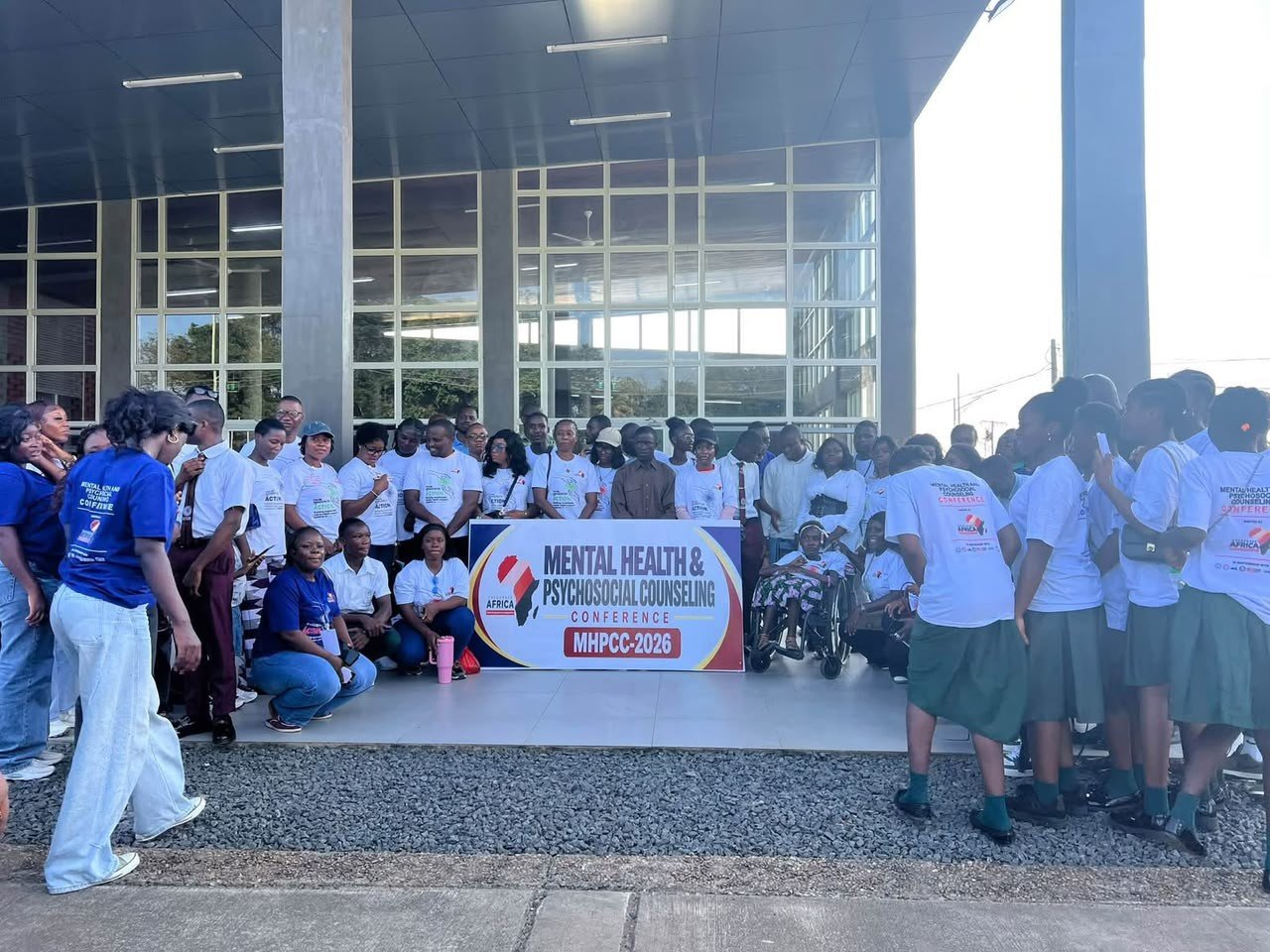
She made the call over the weekend at a mental health awareness and psychosocial counselling conference held at the Liberia Learning Center in Paynesville, where she presented findings from her research titled, “Mental Health Awareness in Liberia’s Educational Sector: A Comparative Evaluation.”
According to Davis, the failure to distinguish mental health conditions from behavioural misconduct can have lasting consequences for students’ academic progress, emotional well-being, and personal development.
To illustrate the situation, she recounted the experience of a young boy who was expelled from school because of disruptive behaviour, only for his challenges to later be understood as symptoms of ADHD.
She said the incident underscores the need for schools to move beyond punitive disciplinary measures and embrace early identification, mental health education, parental involvement, and referral systems that connect affected students to qualified professionals.
Davis, an educator, researcher, and community development practitioner, urged parents, teachers, and school administrators to recognize early signs of psychological distress and create supportive learning environments where students can seek assistance without fear of discrimination.
“I am not just a CEO and founder; I am a teacher and a principal of a school. I am trained to sit in that classroom and be able to identify these challenges. We are professionals who took years outside Liberia studying how we can better the educational system of our beloved Liberia. I am glad I am back to do just that,” she said.
The IWYE Executive Director also called for stronger collaboration among civil society organizations, government institutions, schools, parents, and mental health professionals to ensure that children experiencing psychological difficulties receive appropriate support.
She maintained that meaningful interventions do not necessarily require enormous financial resources, arguing that collective commitment, professional knowledge, and coordinated efforts could help address the problem.
“We can work together. We don’t need billions of dollars to start. Though as a nation we are making some progress in developing mental health policy, we must never allow it to remain only on paper. It has to translate into practical support and action. So, we must, as a nation, act now,” Davis emphasized.
She further urged Liberians to treat mental health as a national priority, cautioning against allowing political differences to undermine collective efforts to protect the country’s children and young people.
“Let’s start to address mental health as a national urgency and remove our political garment. The future of this nation rests on us all to do the needful,” she declared.
Davis also encouraged participants to become ambassadors for mental health awareness in their respective communities, stressing that improving the educational system must extend beyond academic performance to include the emotional and psychological well-being of learners.
She said her professional journey is driven by a desire to work alongside other young women in Liberia to contribute to the transformation of the country’s educational system.
Davis holds a Bachelor’s Degree in Education, a Master’s Degree in Psychology, and an Associate of Arts degree in School Administration, in addition to several national and international professional certificates.
Her work in education and mental health advocacy has received international recognition. Following a presentation at the National Conference on Contemporary School Mental Health Initiatives in New Delhi, India, she received a Citation of Honour in recognition of her contributions and commitment to educational improvement.
She has also authored several research papers published by internationally recognized institutions, including the London School of Economics (LSE) Digital Library.
Davis’s appeal places renewed attention on the need for Liberia’s educational institutions to recognize that students’ academic and behavioural challenges may sometimes be linked to underlying psychological conditions.
For schools, parents, and policymakers, the challenge remains ensuring that children experiencing ADHD, anxiety, trauma, and other mental health difficulties are identified early, treated with understanding, and given equal opportunities to learn and succeed rather than being stigmatized or pushed out of the education system.
About The Author