
Monrovia-In a move that has already sparked intense public debate from Monrovia to Maryland County, the House of Representatives is now considering a first-of-its-kind law to formally regulate how marriage engagements are conducted in Liberia.
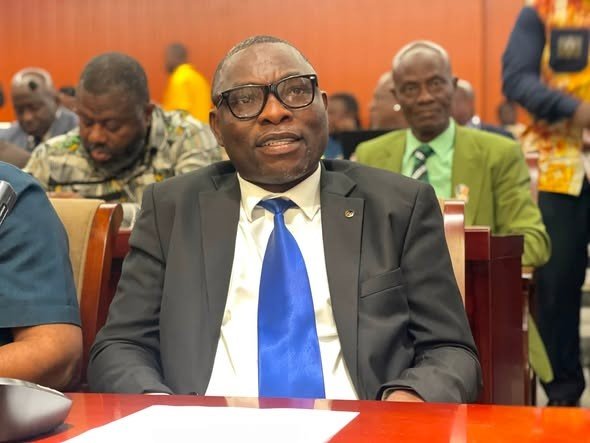
The proposal, which seeks to bring broken engagements and bride-to-be disputes under the purview of Liberian statutory law, was tabled Tuesday by Maryland County District #2 Representative Anthony F. Williams.
Rep. Williams submitted bill is titled “An Act to Regulate Marriage Engagements, Provide for the Voluntary Registration of Engagements, Promote the Timely Celebration of Intended Marriages, and Protect the Rights of Intended Spouses.”
A formal communication to House Speaker Richard Nagbe Koon dated October 28, 2026,
Unlike current practice where engagements are purely traditional, family, or religious matters with no legal standing, the proposed Act would establish a clear legal framework for resolving engagement-related disputes.
The legislation has been officially received and forwarded to a Joint Committee comprising the Committees on Judiciary; Gender, Women and Social Protection; and Local Affairs for review, scrutiny, and report to Plenary.
It is not yet law and remains subject to debate, public hearings, and possible amendments.
According to legislative sources, the Williams proposal contains several striking provisions, including Voluntary Registration of Engagements, which would create a system for couples to voluntarily register their engagement with local authorities. Registration would serve as prima facie evidence that an engagement exists, the date it began, and the intention of both parties to marry.
There is an issue of ‘regulation of engagement duration.’ By this, the Act seeks to address the growing social problem of indefinite engagements. It proposes a reasonable time-frame within which an intended marriage should be celebrated after engagement, to prevent situations where one partner is held in a prolonged engagement without progress.
The other aspect is ‘recovery of gifts and financial Losses’ which is considered to be the most contentious clause.
The bill provides a legal pathway for an aggrieved party to recover certain gifts, bride-price items, and proven financial expenses incurred in anticipation of marriage, if the engagement is broken without just cause. This includes expenses for introduction ceremonies, dowry negotiations, and other customary commitments.
Also is ‘protection against fraud, coercion and deception.’ With this, the bill explicitly emphasizes that no person should be forced, threatened, or deceived into marriage. It criminalizes the use of fraud, misrepresentation, or undue pressure to secure an engagement.
Another aspect is ‘right to withdraw consent.’ In a critical balance, the proposed law reaffirms the fundamental right of either party to withdraw consent and end an engagement at any time.
The law would not force anyone to marry against their will. Instead, it seeks to regulate the consequences of that withdrawal, particularly when one party has suffered financial harm.
Rep. Williams, who represents a largely rural and traditional constituency in Maryland County, is said to have been motivated by a surge of informal complaints brought to his office, cases of young women left stranded after years of engagement, families losing significant resources on broken customary engagements, and men accused of engaging multiple women simultaneously for financial gain.
Currently, when an engagement collapses in Liberia, the aggrieved party has almost no legal recourse. Disputes are settled by family elders, town chiefs, or often left unresolved, leading to bitterness, domestic disputes, and in some cases, threats and violence.
The law attempts to fill that legal vacuum. Legal analysts say if passed, Liberia would join a small number of African jurisdictions with a codified “breach of promise to marry” statute, modernizing a principle that already exists under common law but has never been clearly defined in Liberian statute.
The Joint Committee is expected to hold public hearings in the coming weeks, where traditional leaders, women’s groups, religious institutions, and civil society will be invited to weigh in on what promises to be one of the most socially debated bills of this legislative session.
About The Author