
Monrovia-What started as a routine confirmation hearing has erupted into a full-blown political showdown on Capitol Hill, pitting the Legislature against the Executive Branch over pay, privilege, and the management of the nation’s currency.
The House of Representatives has ordered Central Bank of Liberia (CBL) officials and Finance and Development Planning Minister Augustine Kpehe Ngafuan to appear before its plenary to answer two explosive questions gripping the public.
The focus of the summon is to explain why do the Executive Branch officials earn far more than lawmakers, and why is there a persistent shortage of Liberian dollars in circulation
The controversy traces directly to October 22, when Euphemia G.T. Swen-Monmia, President Joseph Nyuma Boakai’s nominee for Deputy Governor for Economic Policy at the CBL, appeared before the Senate Committee on Banking and Currency.
In a rare moment of candor for Liberian public officials, Swen-Monmia broke down her compensation package under questioning from Montserrado County Senator Abraham Darius Dillon.
Acting in the post since August 12, 2026, she testified: “My monthly salary is US$9,000. Besides the salary, I also receive cash benefits of around US$5,000. My housing allowance should be around US$15,000.”
The total package, US$29,000 per month, was disclosed publicly during her confirmation hearing, a practice uncommon among Liberian officials.
The figure sent shockwaves across Monrovia, raising concerns in a country ranked among the world’s poorest, where many civil servants earn below the US$150 minimum wage, the revelation that one Deputy Governor earns more than 190 times that amount has fueled public anger.
The Center for Transparency and Accountability in Liberia (CENTAL) described the package as “excessive, unfair and unacceptable,” while ordinary citizens and government workers alike have expressed disbelief.
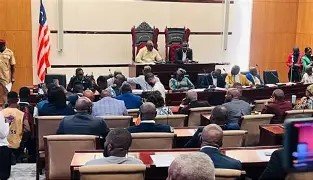
On Tuesday, October 28, 2026, the House of Representatives, acting in plenary at Capitol Hill, ordered a sweeping review of salaries and benefits across government.
Lawmakers argued that the disclosure exposed a deep and systemic disparity between the two branches.
While legislators receive a harmonized salary structure capped by law, top Executive officials, directors of state-owned enterprises, governors, and commissioners are allegedly earning far beyond that threshold.
In a communication to Plenary, Representative Mulbah requested that Finance Minister Ngafuan provide detailed information on all government officials receiving monthly salaries and benefits exceeding US$5,000, including ministers, directors, governors and commissioners.
The House voted to summon Minister Ngafuan to provide that breakdown and to justify why the Executive is allowed to maintain a parallel, higher pay scale.
The House has directed its Sergeant-at-Arms to ensure the Minister’s appearance, as debate over “equal pay for equal work” intensifies. Legislators contend that lawmakers, as members of the First Branch of Government, should not earn less than appointed officials they are constitutionally mandated to oversee.
This comes against a backdrop of the controversial Salary Harmonization Policy introduced by the previous CDC government. Finance Minister Ngafuan had previously explained that the government was still using the previous administration’s pay scale and would move away from it only when conditions allowed, so as to keep Liberia on track with its IMF program.
In February 2026, he approved targeted increases for the LACC, General Auditing Commission and the Judiciary, but the core harmonization framework remains.
In a separate but related summons, the House has also ordered CBL officials to appear to answer pressing economic concerns – most notably the acute shortage of Liberian dollars (LRD) in the market.
Businesses, market women, and commercial banks across Montserrado and the leeward counties have complained for weeks that they cannot access sufficient LRD banknotes for daily transactions, even as US dollars remain dominant.
The Central Bank, which has the statutory mandate to ensure adequate currency in circulation, has not publicly explained the shortage. Lawmakers want to know what has caused the scarcity, what measures the Bank is taking to inject new banknotes, and how its high administrative payroll – highlighted by the Deputy Governor’s US$29,000 package – aligns with its core monetary responsibilities.
The disclosure of the Central Bank of Liberia Deputy Governor’s salary during her confirmation hearing has sparked significant debate within the House, with the House now calling for a comprehensive review of salaries and allowances paid to senior government officials.
Both hearings are expected to be held in open plenary in the coming days, as pressure mounts on the Boakai administration to reconcile its promise of fiscal discipline with the reality of lavish pay at the top and hardship at the bottom.
About The Author