
Monrovia-The search for solutions to Liberia’s decades-long crisis in the mineral sector is overdue but still remains vital to current dispensation. The reason, according to analysts, tied to the fact that Liberia is sitting on billions of dollars in iron ore, gold, diamonds and newly discovered critical minerals, yet it continues to lose most of the value.
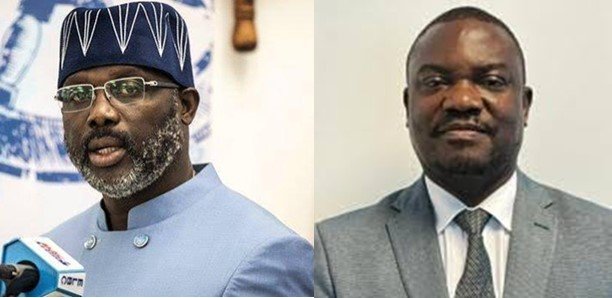
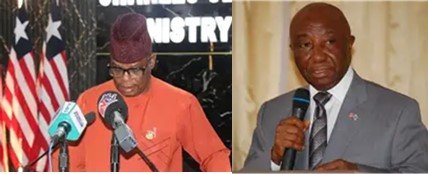
It is that contradiction that dominated the Liberia International Mining and Energy Conference and Expo (LIMEC 2026), where President Joseph Nyuma Boakai and Mines and Energy Minister R. Matenokay Tingban laid out in detail what has gone wrong, and what they intend to fix.
The two-day conference, held October 28-29 at the Farmington Hotel under the theme “Powering Prosperity: Sustainable Mining and Energy as Catalysts for Liberia’s Economic Transformation,” brought together government officials, mining executives, U.S. and Chinese diplomats, and investors seeking an estimated US$3 billion in new mining and energy investments.
Both Boakai and Tingban admitted the sector that grew 17% and accounted for 18.4% of real GDP in 2025 has been undermined by systemic failures:
Liberia’s Minerals and Mining Law was written in 2000, before the end of the civil war. It is widely seen as out of date, lacking provisions for modern licensing, state equity, and critical minerals.
The House opened public hearings in July to rewrite it.
For decades, Liberia has signed concessions without knowing what it owns. Minister Tingban said about 80% of Liberia remains unexplored. “No data, no deal,” he told investors.
Without an airborne geophysical survey, the country cannot negotiate fair mineral development agreements.
Minister Tingban recently warned Liberia is losing up to US$1.6 billion in smuggled gold alone.
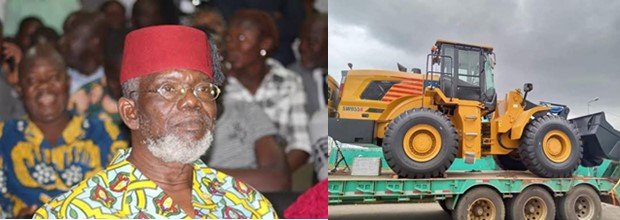
Inspections in mining communities found widespread unauthorized operations, including heavy excavators and dredges operating without licenses.
Recent crackdowns include closure of Alex Gee Group in Belle-Yallah on April 21, 2026 for operating on an expired Class B license, and dismantling of an illegal site in Gbayea Town, Tchien District, allegedly run by Chinese nationals.
For years, critics have accused authorities of weak oversight, selective enforcement, inadequate monitoring systems, and institutional complacency that allegedly enabled widespread illegal mining to flourish.
Tingban cited the increasing use of excavators and the influx of Burkinabè migrants into southeastern mining regions, a trend that has persisted for over a decade, as evidence of limited enforcement capacity.
President Boakai, for his part, pointed to Yekepa, Bong Mines, and Mano River as cautionary tales, “ghost cities” abandoned after minerals were extracted.
Liberia exports raw ore and unrefined gold, capturing only royalties while processing jobs and profits go abroad.
President Boakai used his keynote address on Wednesday to announce a sharp policy shift, declaring “Liberia will require gold to be refined domestically before export.”
He said new policy requires primary and secondary refining at licensed domestic facilities to international purity standards, with a gold refinery to be established within two years.
He insisted “This is going on in other countries, and it should happen here.”
A new fund, operating under the Santiago Principles for independent sovereign funds, will receive a fixed share of mineral revenues to invest in diversified domestic and global assets, converting finite minerals into long-term savings for future generations.
The National Mining Company of Liberia will move the country from collecting royalties alone to taking equity and strategic ownership in projects.
Tingban stressed its commercial activities must remain separate from the Ministry’s regulatory role to avoid conflict of interest.
Under the Millennium Challenge Corporation’s second compact, a US$30 million airborne geophysical survey will finally map Liberia’s critical minerals, including lithium, neodymium, nickel, cobalt, copper and uranium recently flagged by a China-funded survey.
Tingban launched an initiative to formalize artisanal and small-scale mining (ASM), including a US$1 million Formalization of Artisanal and Small-Scale Mining for Peace and Security (FASMIN) Project launched October 26.
It will ease licensing, help miners form cooperatives, and provide safety and environmental training, with focus on women and youth.
Minister Tingban summarized the new stance: “We are taking these illegal mining practices very seriously. Liberia’s mineral wealth must contribute to national development and not be smuggled out while our people continue to struggle.”
President Boakai added a warning to investors: “People who want to be good friends of Liberia, who want to be investors, must come with clean hands and with genuine interest to make profit, but also to make sure that Liberians get the benefit of their resources.”
The LIMEC 2026 conference, jointly organized by the Ministry of Mines and Energy, the Liberia Chamber of Mines and AME Trade Ltd., has ended with pledges from ArcelorMittal, whose investment in Liberia is now nearly US$4 billion and whose exports will rise from under 5 million tons in 2024 to over 20 million tons in 2027, and other operators, as Liberia bets its future on cleaning up the lapses of its past.
About The Author