
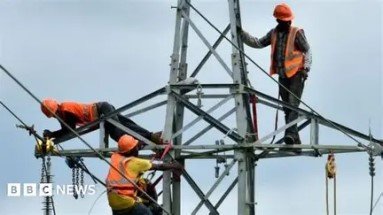
Monrovia-Power theft in Liberia has become a norm, a dangerous norm that is making it difficult for the Liberia Electricity Corporation (LEC) to deliver reliable electricity and pushing the state-owned utility to the edge of financial collapse.
Across Monrovia and its surroundings, LEC is losing millions of United States dollars annually without trace to commercial losses, the bulk of which is attributed to illegal connections, meter tampering, and direct hooking from distribution lines.
For years, the city of Monrovia has been the hardest hit by what is now referred to by some as the ‘power theft curse,’ a curse LEC itself has been struggling to find a cure for.
Despite sustained efforts, including a legal framework that holds people accountable, the practice has continued unabated.
But why LEC management is not succeeding in quelling the situation, in spite of the legal and monitoring capacities at its disposal, is another concern begging answers.
From central Monrovia to West Point, Clara Town, Logan Town, New Kru Town, Brewerville, Gardnersville and many other localities, the story remains unchanged. Citizens continue to hijack the system and connect to the power grid through fraudulent and dubious means, according to those with knowledge of the situation.
Amid the situation, the question that comes to the fore is why LEC is not winning the battle against power theft.
Most citizens have put the problem squarely at the feet of LEC, accusing management of lacking effective response mechanisms to technical issues affecting them, such as meter, line and transformer problems.
“Not wanting to sleep in darkness for days or, at times, months, citizens go their own way to find solutions, using default and by-channels,” remarked a concerned citizen who claimed he has been victimized many times by LEC’s lackadaisical approach when there are issues with lines, meters and transformers.
It is a vicious cycle that LEC is slow to respond to faults, forcing residents to resort to illegal connections to avoid sleeping in darkness. According to information available to this paper, the illegal load blows the transformer at times, causing whole community to go dark again, and unfortunately, LEC takes weeks to replace it.
The is the exact problem facing residents of Barchue Town, adjacent to the Polotortor area, where the consequences are no longer abstract. According to reports, they are in total darkness.
For now, residents of the Town are calling on the LEC management to urgently restore electricity to their community following the recent failure of the transformer supplying power to the area.
The incident has plunged the entire community into darkness, disrupting small businesses, cold stores, schools, and daily household activities.
Speaking to Spoon News, some community members blamed suspected electricity theft by some residents for the repeated transformer failures, noting that a similar incident occurred last year.
They believe unauthorized connections and the illegal use of electricity are overloading the transformer beyond its rated capacity, causing it to trip and eventually burn out.
“The transformer did not fail by itself. People are stealing current and connecting plenty freezers and ACs illegally. The load becomes too much,” one resident said.
The residents are now urging LEC to deploy inspection teams to the community regularly to identify and penalize individuals found stealing electricity.
According to them, consistent monitoring could help minimize power theft, prevent overloading, and reduce recurrence.
Meanwhile, they are appealing to LEC to replace the damaged transformer and restore power, while strengthening monitoring to protect the new installation.
One account says LEC’s problem is national, that with an installed generation capacity that remains far below demand, every kilowatt stolen is a kilowatt taken from a paying customer.
Industry sources say LEC’s aggregate technical and commercial losses hover above 60 percent, one of the highest in the sub-region, meaning for every 100 kWh injected into the grid, LEC bills less than 40 kWh.
Of that, it collects even less. What happens in most cases, according to reports, common methods, including direct hooking from bare conductors, especially in densely populated communities like Duala, Gardnersville, Paynesville, and New Kru Town become the only workable options.
There are reports of meter bypass and tampering of prepaid meters, illegal reconnections after disconnection for non-payment, coupled with collusion between customers and some field staff.
These default processes often resort to transformers blow up, feeders trip, LEC loses revenue needed for fuel, maintenance, and expansion, and honest customers pay more through high tariffs and prolonged blackouts.
A former LEC manager estimated that power theft costs the Corporation between US $15 million to US $30 million annually in unbilled energy, money that could have been used to connect 50,000 new households, buy new transformers, or reduce the tariff from the current $0.22 per kWh, one of the highest in West Africa.
LEC has in the past launched anti-theft campaigns, including the Power Theft Taskforce with the Liberia National Police and community-based reporting hotlines.
Dozens of arrests have been made, but prosecutions rarely lead to custodial sentences, and many disconnected users reconnect within days.
“We can change the transformer in Barchue Town today, but if we don’t stop power theft, we will be back there in three months to change it again,” an LEC technician said.
Until LEC fixes its response time and citizens stop the illegal connections, the ‘power theft curse’ will continue to keep Liberia in darkness, even when the power plant is generating light.
About The Author