By Jamesetta D Williams
MONROVIA – The Liberia Anti-Corruption Commission (LACC) has given its backing for proposed amendments to the Witness Protection Act of 2021 and the Whistleblower Act of 2021, describing the reforms as critical to strengthening Liberia’s anti-corruption framework and encouraging citizens to report wrongdoing without fear.
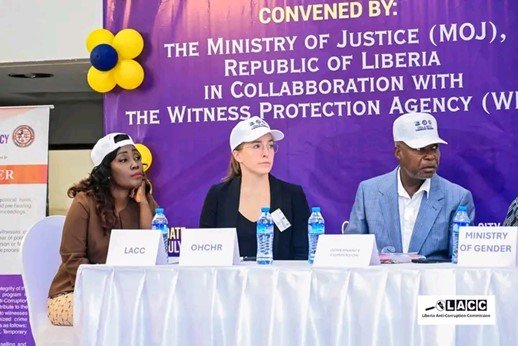
The Commission made the commitment on Friday during a one-day stakeholders’ engagement organized by the Ministry of Justice in collaboration with the Witness Protection Agency (WPA) at Monrovia City Hall.
Held under the theme, “Strengthening Protection Mechanisms for Witnesses, Whistleblowers, and Victims: Advancing Liberia’s Anti-Corruption and Transitional Justice Commitments,” the engagement brought together representatives of civil society organizations, the media, development partners, integrity institutions, and government agencies to review and provide input on the proposed legislative amendments.
Delivering the keynote address, Justice Minister Cllr. Oswald Tweh emphasized that an effective justice system depends on the willingness of ordinary citizens to provide truthful information without fear of intimidation or retaliation.
According to the Minister, the proposed amendments seek to establish a Victim, Witness, and Whistleblower Trust Fund, which would receive an annual allocation of US$1 million from the national budget to support protection mechanisms for vulnerable individuals who assist in the administration of justice.
Cllr. Tweh also urged civil society organizations, the media, legal practitioners, and human rights advocates to make meaningful contributions to the draft legislation before it is submitted to the Legislature for consideration.
Representing the Executive Chairperson of the Liberia Anti-Corruption Commission, Executive Assistant Madam Vivian S. Akoto delivered a statement on behalf of Cllr. Alexandra K. Zoe. She reaffirmed the Commission’s support for the proposed reforms, noting that fear of retaliation remains one of the greatest obstacles preventing witnesses and whistleblowers from exposing corruption.
Ms. Akoto stressed that many corruption investigations begin because courageous citizens choose integrity over silence despite the significant personal risks they face. She welcomed the proposed amendments, including stronger confidentiality measures, enhanced legal protections, incentives for reporting corruption, tougher penalties for retaliation, and modern digital protection mechanisms.
She described the proposed reforms as essential steps toward strengthening Liberia’s anti-corruption architecture and creating a safer environment for individuals who report corruption.
Ms. Akoto further emphasized that the fight against corruption requires sustained collaboration among investigative institutions, prosecutors, the judiciary, civil society organizations, the media, development partners, and the Liberian people.
She also noted that strengthening Liberia’s witness and whistleblower protection laws is consistent with the country’s obligations under the United Nations Convention Against Corruption (UNCAC) and demonstrates its commitment to international standards while reinforcing public confidence in the rule of law.
In concluding her remarks, Ms. Akoto reaffirmed the Commission’s commitment to working closely with the Witness Protection Agency, the Ministry of Justice, and other stakeholders to strengthen systems that encourage citizens to report corruption without fear of retaliation.
The stakeholders’ engagement forms part of ongoing national efforts to strengthen Liberia’s legal framework for protecting witnesses, whistleblowers, and victims while advancing the country’s anti-corruption and transitional justice agenda.
About The Author