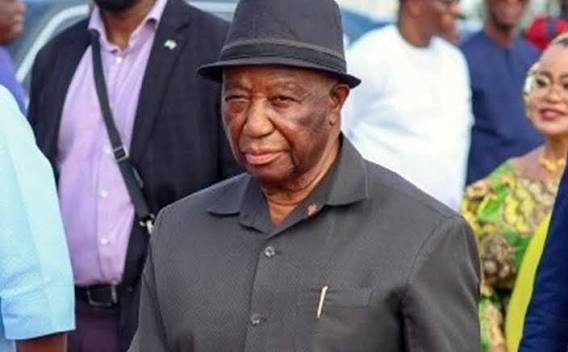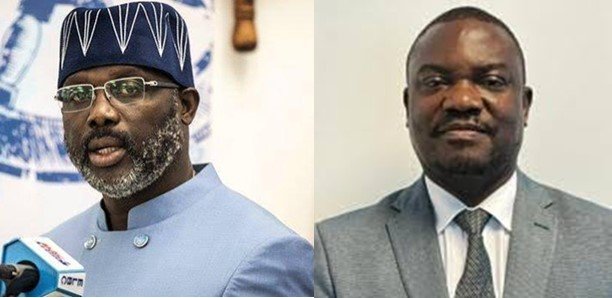

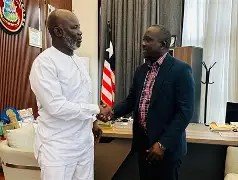
Speaker Koon & Cllr. Barbu
Monrovia-The Office for the Establishment of the War and Economic Crimes Court for Liberia, OWECC-L, has clarified the current status of the proposed War and Economic Crimes Court, WECC, following assertions attributed to the Speaker of the House of Representatives, Hon. Richard Nagbe Koon, that the Court has already been established by the Legislature.
The clarification follows a video posting in which Speaker Koon is seen informing the President and representatives of the Federation of Liberian Youth, FLY, on Thursday, October 29, 2026, while receiving a petition from the FLY calling for the speedy passage of the WECC and National Anti-Corruption Court, NACC, Bills currently before the House and Senate.
Responding to Mr. Duku Jallah’s appeal for the speedy enactment of the courts, Speaker Koon stated that the Legislature has already passed the War Crimes Court legislation and as proof, he referenced Dr. Cllr. Jallah A. Barbu as heading the court.
“As my memory can set me right, we have passed the War Crimes Court, and if the War Crimes Court wasn’t passed, we couldn’t have had Dr. Barbu there as Executive Director; it was passed before I could even become Speaker,” Koon said.
The statement, captured on video, quickly circulated on social media, sparking confusion among Liberians and international partners who have been following the transitional justice process.
While OWECC-L appreciates the cooperation, engagement and coordination demonstrated by the National Legislature in the ongoing transitional justice process, the Office says that the Speaker’s information that the War Crimes Court has already been established is not the case.
In a press statement issued Thursday, OWECC-L clarified the legal facts, saying President His Excellency Joseph Nyuma Boakai, Sr. issued Executive Order Number 131 establishing the OWECC-L, and in October 2024, appointed Dr. Cllr. Jallah A. Barbu as Executive Director to lead the establishment of the WECC and NACC.
It said Executive Order 131 did not establish the Court itself, it established an Office to work with the Legislature, Judiciary, Ministry of Justice, international partners and civil society to draft the framework, build consensus, and lay the groundwork for the Court.
The actual establishment of the War and Economic Crimes Court and the National Anti-Corruption Court requires an Act of the Legislature, a law passed by both Houses and signed by the President.
That law has not yet been passed, according to OWECC-L, stressing that two critical bills are currently before the Legislature, includinig the War and Economic Crimes Court Bill, which will create the legal basis, jurisdiction, structure and funding mechanism for the WECC to try war crimes, crimes against humanity, and economic crimes committed during Liberia’s civil wars, and the National Anti-Corruption Court Bill, which will create a specialized court to fast-track corruption cases.
The Federation of Liberian Youth, FLY, led by Duku Jallah, petitioned the House on Thursday demanding speedy passage of both bills, arguing that justice delayed is justice denied for victims who have waited over 20 years since the end of the war.
The clarification matters because it touches the heart of Liberia’s transitional justice promise. Recall that President Boakai, upon taking office, pledged to implement the Truth and Reconciliation Commission recommendations, including the War Crimes Court.
His issuance of Executive Order 131 was hailed by victims, human rights groups and international partners as a bold step.
But Executive Orders are temporary, as it is only an Act of the Legislature gives the Court permanence, independence, and protection from future reversal.
If citizens are told the Court already exists, pressure on the Legislature to pass it eases, and victims’ expectations become misaligned with reality.
“There is no War Crimes Court yet, there is an Office working to establish the Court,” a legal expert explained. “
Dr. Barbu is Executive Director of the Office for the Establishment, not Executive Director of the Court. The Court will have judges, prosecutors, registrars, none of which have been appointed.”
OWECC-L thanked Speaker Koon for his engagement and reaffirmed its commitment to work with the Legislature to ensure the bills are passed.
Sources in the House say the Joint Committee on Judiciary and Human Rights is reviewing the bills, with public hearings expected in coming weeks.
For victims in Lofa, Nimba, Grand Gedeh and Montserrado who gave testimonies to the TRC and are still waiting for justice, the distinction is not technical, it is everything.
Until the gavel falls and the law is signed, the War and Economic Crimes Court remains a promise before the Legislature, not yet a reality in Liberia’s judicial system.
About The Author