
By Jamesetta D. Williams
Monrovia-The State-Owned Enterprises Authority of Liberia (SEAL) has announced plans to reduce government subsidies to state-owned enterprises (SOEs) by 20 percent by 2029 as part of a broader reform agenda aimed at improving accountability, financial performance, and governance in public institutions.
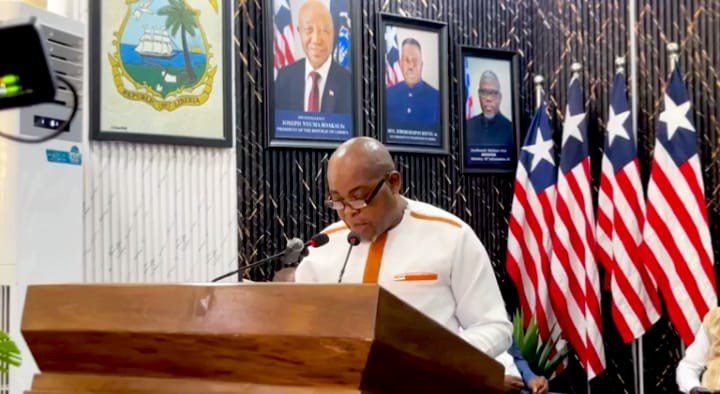
The target was announced by SEAL Director-General Hon. J. S. B. Theodore Momo, Jr., during a presentation at the Ministry of Information, where he outlined the transition from the former Bureau of State Enterprises to the newly established authority and its plans to reform Liberia’s state-owned enterprise sector.
Momo said Liberia currently has 46 state-owned enterprises operating across sectors including energy, water and sanitation, maritime and ports, communications, agriculture, forestry, insurance, gaming, health, welfare, and education.
According to him, these enterprises employ more than 10,000 Liberians and contribute over US$30 million annually to national revenue.
He said the performance of state-owned enterprises has a direct impact on the country’s economic development, stressing that when public enterprises perform well, the nation benefits, but when they fail, ordinary citizens bear the consequences.
The Director-General said the former Bureau of State Enterprises faced several challenges, including weak legal authority, institutional inactivity, limited staffing, poor reporting systems, and inadequate oversight of public enterprises.
He explained that the bureau, established under Decree No. 8 of 1985, lacked the authority to compel state-owned enterprises to comply with reporting and governance requirements, making oversight difficult.
Momo said the bureau also suffered from limited financial and human resources, noting that it operated with approximately 62 staff members and an annual budget of less than US$1 million.
He added that the bureau’s oversight coverage was limited, with only about 20 of the country’s 46 state-owned enterprises receiving regular scrutiny.
According to Momo, only about 13 percent of state-owned enterprises submitted compliant quarterly reports, while many institutions relied on manual and paper-based reporting systems that delayed the review of their financial and operational performance.
The SEAL Director-General further disclosed that an analysis of 20 state-owned enterprises between 2020 and 2024 showed that the Government transferred more than US$90.5 million to sustain loss-making enterprises, while those institutions generated approximately US$26.99 million in accumulated net operating surplus.
He said the figures resulted in a net fiscal drain of more than US$63.6 million, excluding an additional US$116.5 million in accumulated net deficits recorded during the period.
Momo said only about 35 percent of state-owned enterprises operated profitably without government subsidies, describing the situation as a major challenge to the country’s public finances.
He also raised concerns about some state-owned enterprises failing to remit taxes deducted from employees’ salaries to the Liberia Revenue Authority and failing to make required contributions to the National Social Security and Welfare Corporation (NASSCORP).
He said such practices expose workers to risks, particularly regarding their pension and social security benefits.
Momo attributed the transition from the Bureau of State Enterprises to SEAL to the need for stronger legal authority, improved institutional capacity, and a more effective system of accountability.
He said the new authority was established through legislation passed by the Legislature on November 25, 2025, and approved by President Joseph Nyuma Boakai on February 6, 2026, before being published on February 17, 2026.
According to him, the new law gives SEAL clearer authority to require reporting, review the performance of state-owned enterprises, recommend sanctions, and strengthen accountability.
Momo said the reform process would continue through the development of an amended and restated SEAL law, regulations governing state-owned enterprises, a corporate governance code, and a state ownership policy aimed at clarifying the responsibilities of boards, management, and the Government.
He also announced plans to introduce a performance management and compliance system, including performance contracts for state-owned enterprises, with consequences for institutions that fail to meet their obligations.
The Authority is also expected to establish a web-based State Enterprises Information System to provide real-time data on the finances, payrolls, assets, debts, procurement, and performance of public enterprises.
Momo said the system would improve transparency and allow the public to better monitor how state-owned enterprises are managed.
Under its strategic plan for 2025–2029, SEAL aims to increase the proportion of state-owned enterprises operating profitably without subsidies from 35 percent to 65 percent, increase their contributions to the national budget by 50 percent, and reduce government subsidies and bailouts by 20 percent.
The Authority also intends to increase compliant quarterly reporting among state-owned enterprises from 13 percent to 100 percent and achieve full tax payment compliance by 2029.
Momo said SEAL would be held accountable through annual performance contracts with the Presidency, reports to the Legislature, and the publication of its own performance results.
He called on the boards and management of state-owned enterprises to improve financial reporting, pay taxes and social security contributions, and adopt sound corporate governance practices.
He also urged the Legislature, government institutions, development partners, and the media to support the reform process and hold public enterprises accountable.
Momo said improving the performance of state-owned enterprises could lead to more reliable electricity, better water services, efficient ports, increased government revenue, and improved public services.
He added that reducing waste and unnecessary government subsidies could free up public resources for health, education, agriculture, roads, and sanitation.
The Director-General credited President Joseph Nyuma Boakai for providing the political support and leadership needed to transition the former bureau into an authority, saying the reform process was intended to restore public confidence in institutions owned by the Liberian people.
He said SEAL was committed to building a more accountable and efficient state-owned enterprise sector that serves Liberia’s national development interests.
About The Author